Brown Sugar
A photo essay of the Hurricane Helene aftermath

December, 2024
Damascus, Virginia
A man walks through the rundown parking lot behind a convenience store at the head of the Virginia Creeper Trail in Damascus. Questioning if we were locals, to which my buddy and I responded that we were college students at a University 3 hours away. He left, saying he’d see us down the trail. We had been warned about the destruction the area had suffered just a few weeks before our trip due to Hurricane Helene. Despite people’s warnings, we decided to see for ourselves what it truly was.
Initially, what caught our attention was the amount of people’s belongings in the stream. Children’s bikes and books, a pair of pants, cans of paint, lawn signs, cutlery, anything that had been caught in the flash floods in Damascus had ended up here in the creek.
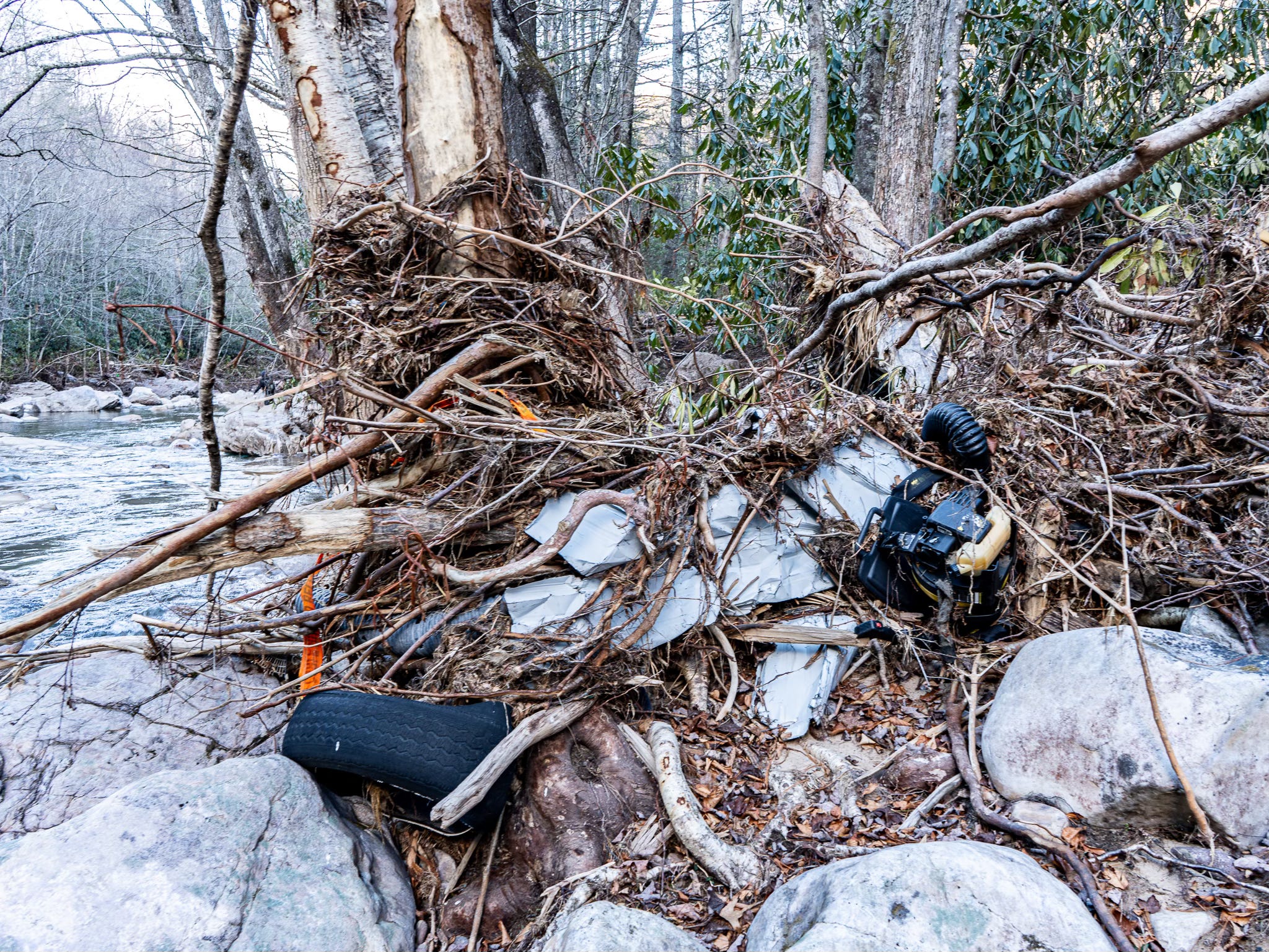
Pockets of trash washed up against the trees, approximately 200 feet from where the trail had washed out
We stopped at a spot where the water had been so high and violent that the surrounding forest and trail had been blown out; no waders meant no access. We sat, ate, and stared for approximately half an hour at the destruction the storm had caused.
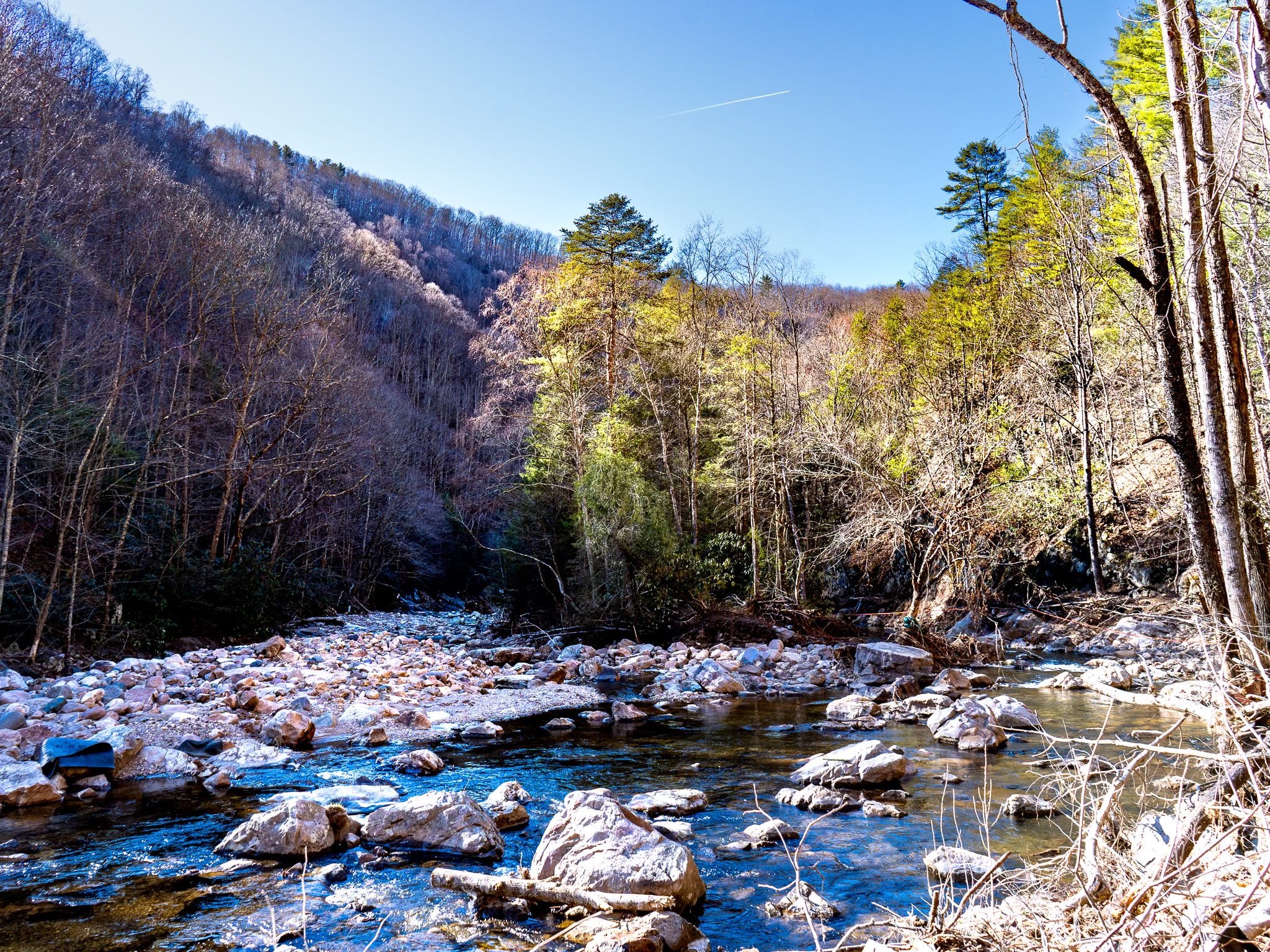
A blown-out section of Whitetop Laurel, caused by immense amounts of flood water and sediment
It was here that the man we saw heading into the trail began to make his way back towards us. He sat down next to us and began to recount who he was and his relationship with the surrounding area.
All of the belongings in the river had been from his childhood home; his parents lived right next to the river. He began recounting the story of the day the floods came, how his parents had almost gotten swept away, how his father saved his mother’s life on an ATV, and how they were lifted via helicopter to safety; he had grown up here but moved away as a young man, but returned after the disaster to help his parents.
Noticing the small bucket with him, which he didn’t have when we saw him in the parking lot. He began to explain.
The small translucent bucket was the brown sugar container from his parents’ home, the same one his mom used when he was a kid. He began talking about how his mother never wanted to get new things, even after many years of use; she always used the same small bucket for her brown sugar.
When asked for his name, he refused to give it; he had already been interviewed by multiple journalists.
There was still brown sugar in the bucket when it was found.
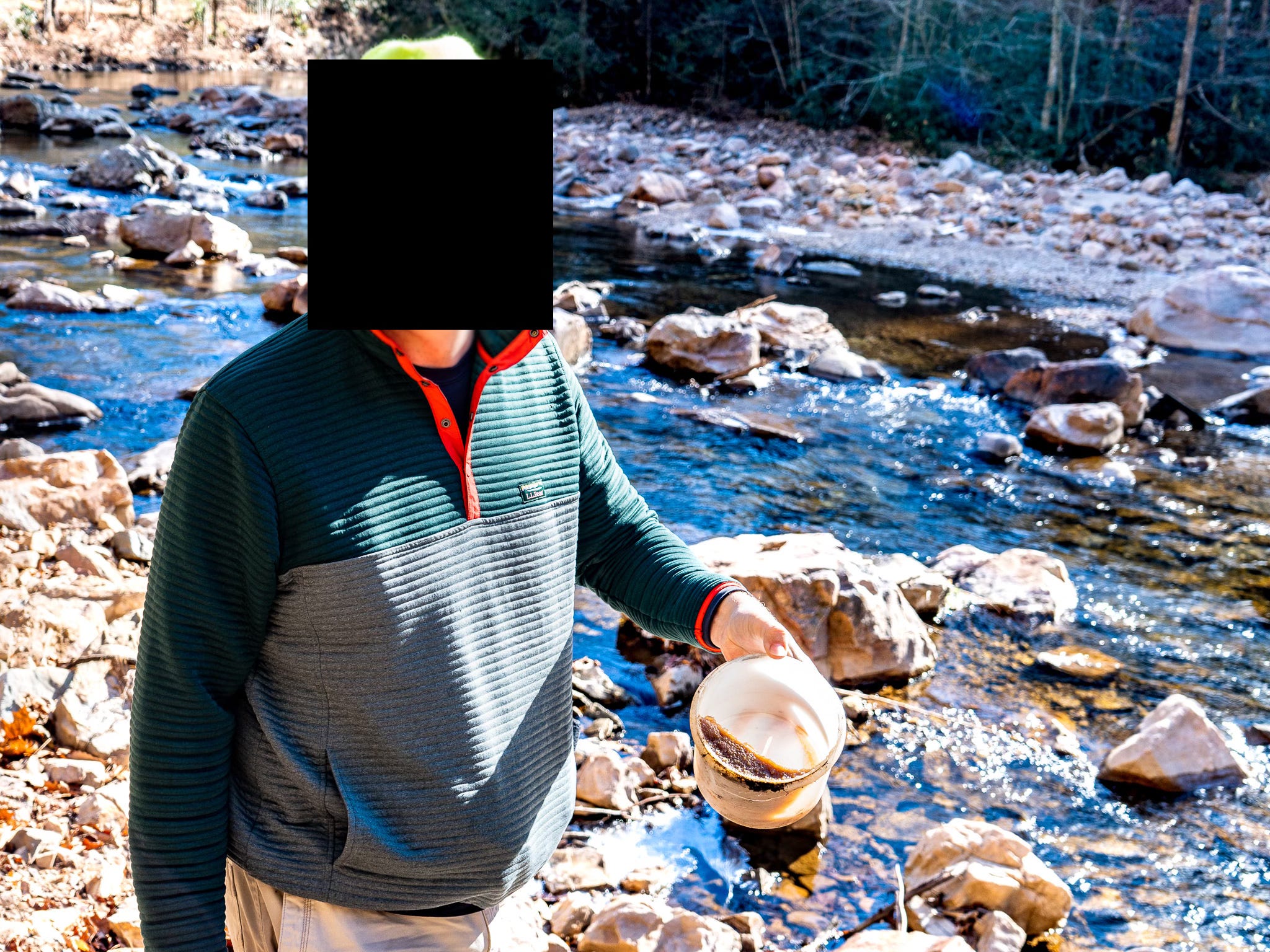
The man holding his mother’s brown sugar bucket, the same bucket she had used when he was a child.
After his recount of the disaster, he began telling us about the dangers of what was in the stream, the endless debris, unmapped and unwalked sections of river, blown-out bridges, 35-degree water, and no cell reception were all things we had to take into account before we moved forward from here.
Even the wires that brought the internet to the entire town of Damascus were exposed on the edge of the river; they had been ripped out from under the Virginia Creeper Trail during the storm.
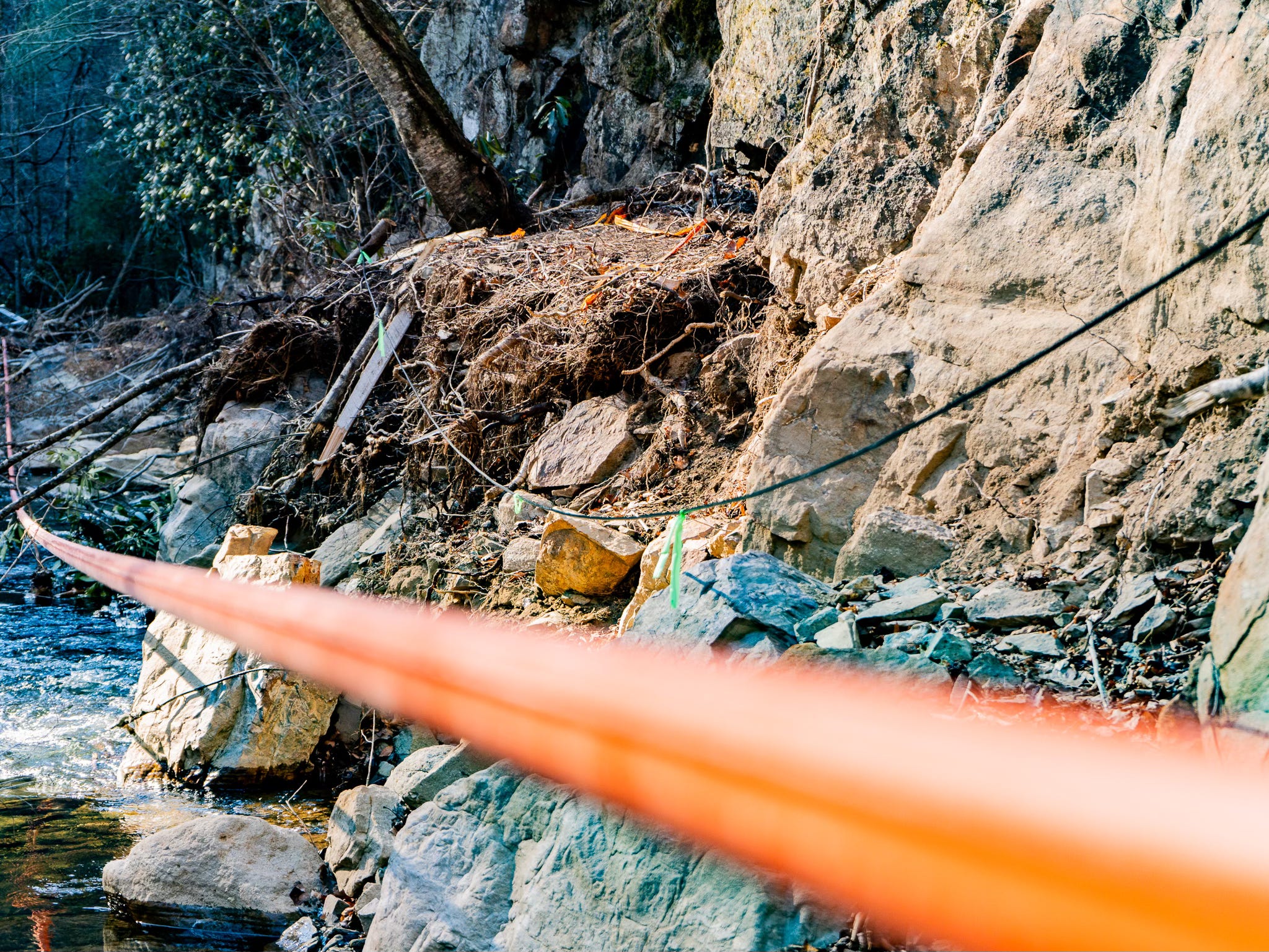
The old internet cable that fed Damascus, which had been damaged during the storm (orange), and the temporary replacement cables (black)
Another problem presented itself, according to the man, one we didn’t face then, but one the wildlife would come to realize in the warmer months. The coating used on the wood of the bridges to stop it from rotting is frozen in December, but would thaw into the stream come spring and summer, he told us. The beams were almost a ton each in some cases, which would have to be removed before the weather warmed. This was the biggest concern for locals because it would kill a lot of fish and harm any wildlife that comes into contact with it.
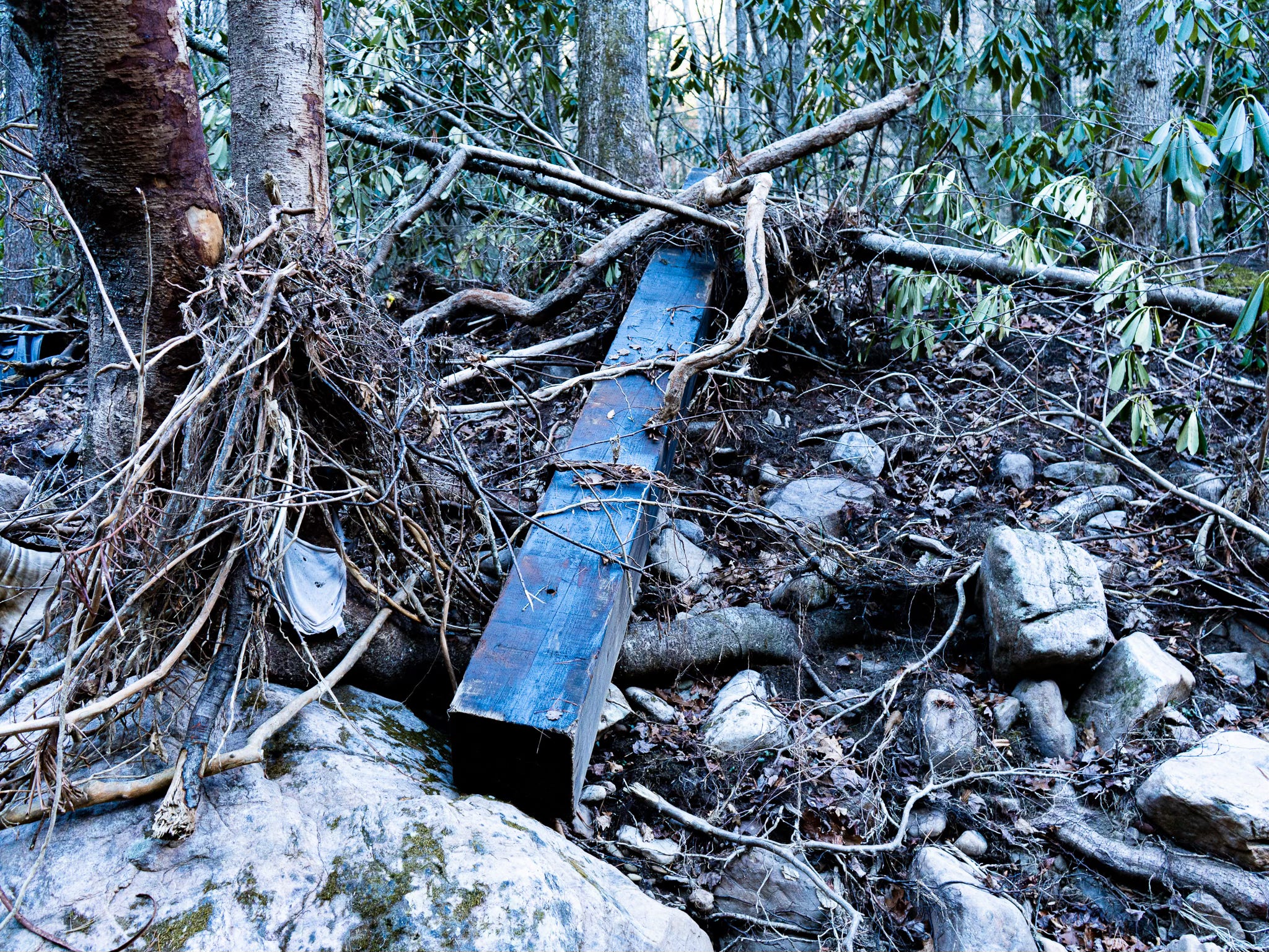
A beam of wood that had been for foot bridges with the anti-coersion coating
After our goodbyes were said to the man, we headed into the parts of the river no one, apart from first responders and rescuers, had been able to access since the storm. To my knowledge, we were the first non-essential workers to see that far back into Whitetop Laurel since the disaster.
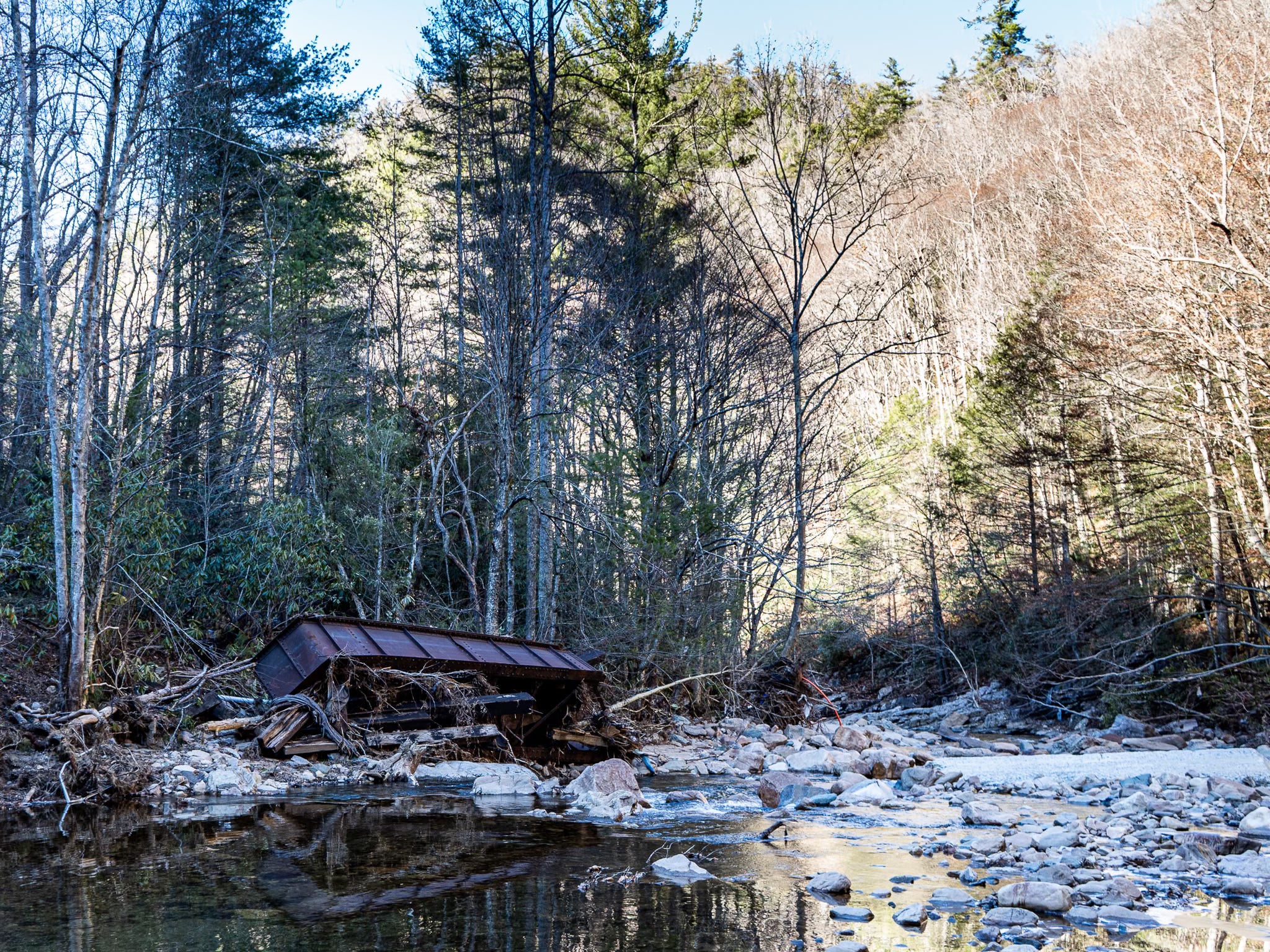
A washed-out, steel bridge that had been ripped from its foundation due to the flood waters
We began wading through waste deep, freezing cold water, to which I discovered a gaping hole in my left boot the hard way. I was debating turning back, but curiosity already had a good grip on me.
Shockingly enough, a few rainbow trout that had survived the floods were hanging out in a pool. Despite our best efforts, they weren’t interested in eating anything we had to offer them. We maneuvered through this deep hole, along the edge of a washed-up bridge. To be exact, I was waist-deep in borderline sub-freezing water in the middle of nowhere, where no one can help us, on very loose rock, right next to a wooden bridge that could tip over us at any moment.
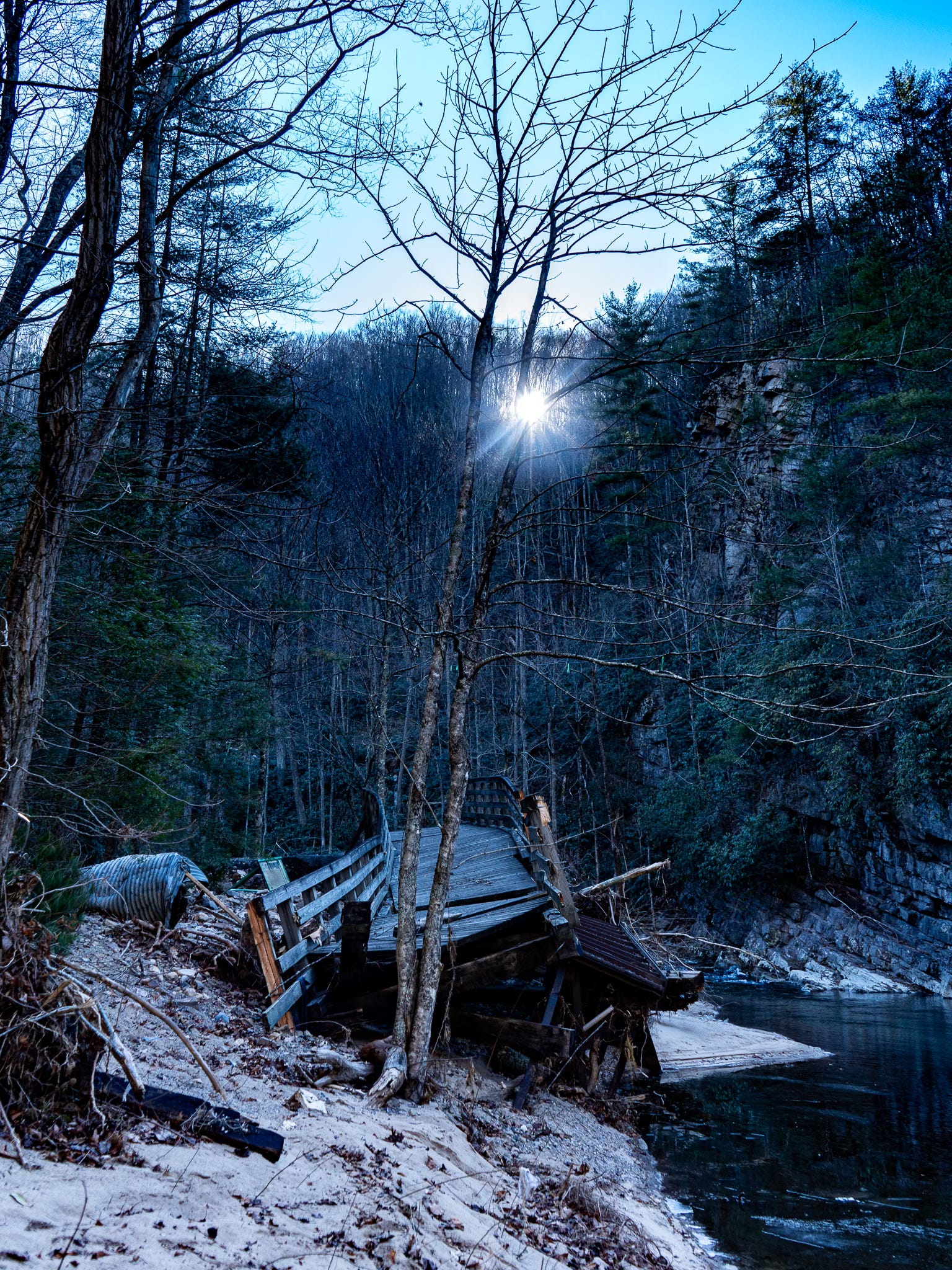
The washed-out wooden footbridge required us to move through the pool to get through the ice and debris
After that situation, we kept pushing forward, finding a part of the trail that had survived the floods, and we made our way further down the stream, avoiding any unnecessary struggle that the unpredictable creek presented. Soon enough, we found another fishy section of the river and put lines in the water. Scanning for our next move, it was here that my friend said to me,
“Do you want photo suggestions?”
“Yeah, of course, what do you have in mind?” I responded.
“Turn around.”
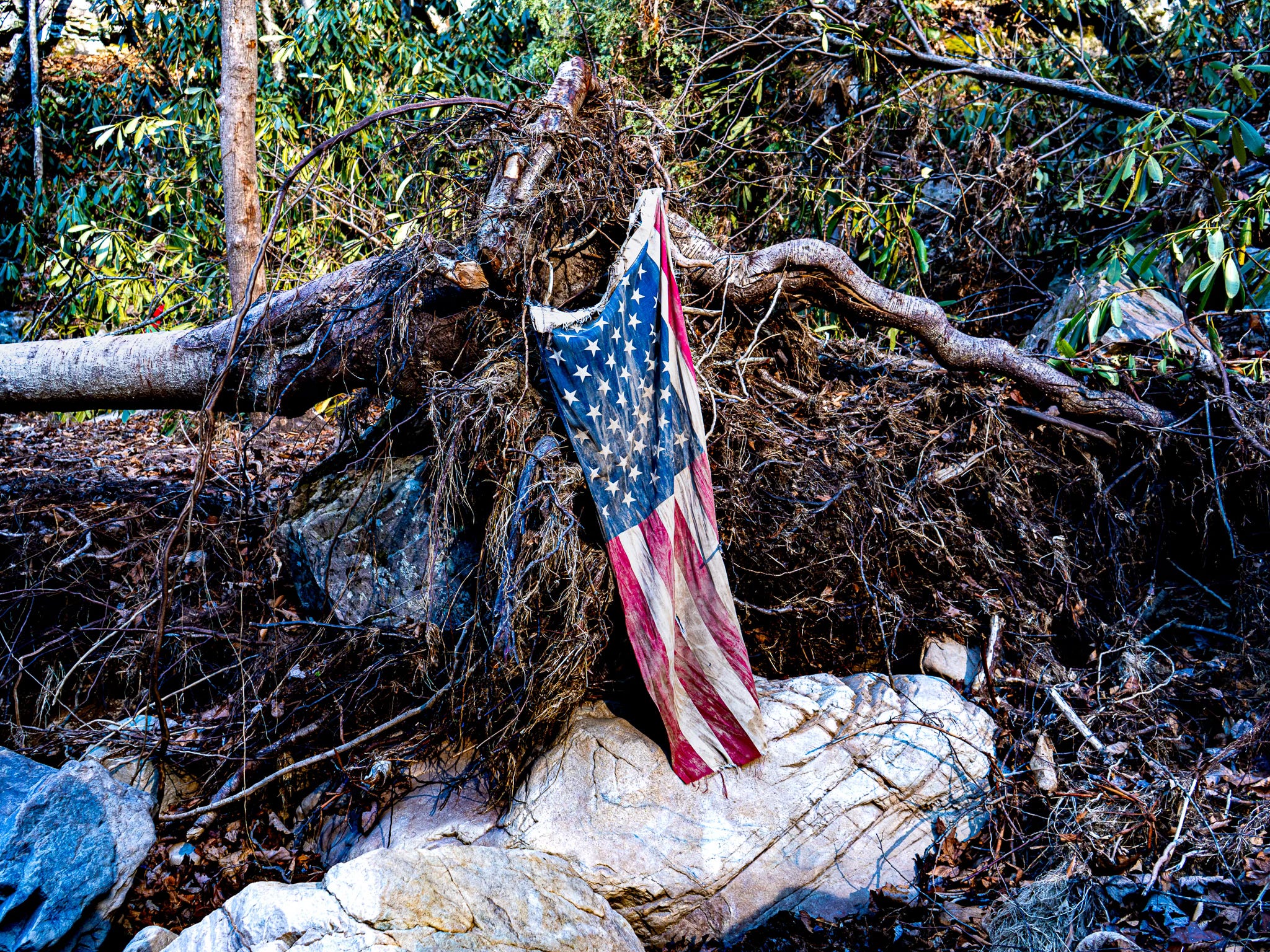
An American Flag, resting on the roots of a fallen tree next to the stream
To this day, this is one of the best photos I’ve ever taken. Would’ve walked right by it if it hadn’t been for my buddy. (Thanks, Mak.)
We didn’t spend much more time in the river after this; we continued for maybe another 100 yards downstream. Day began to turn to dusk, and we couldn’t get caught in the volatile temperature drop that the river valley presents after the sun sinks below the ridgeline. Moving out of the glacier-carved valley, we weren’t interested in finding out how cold that water would get after dusk.
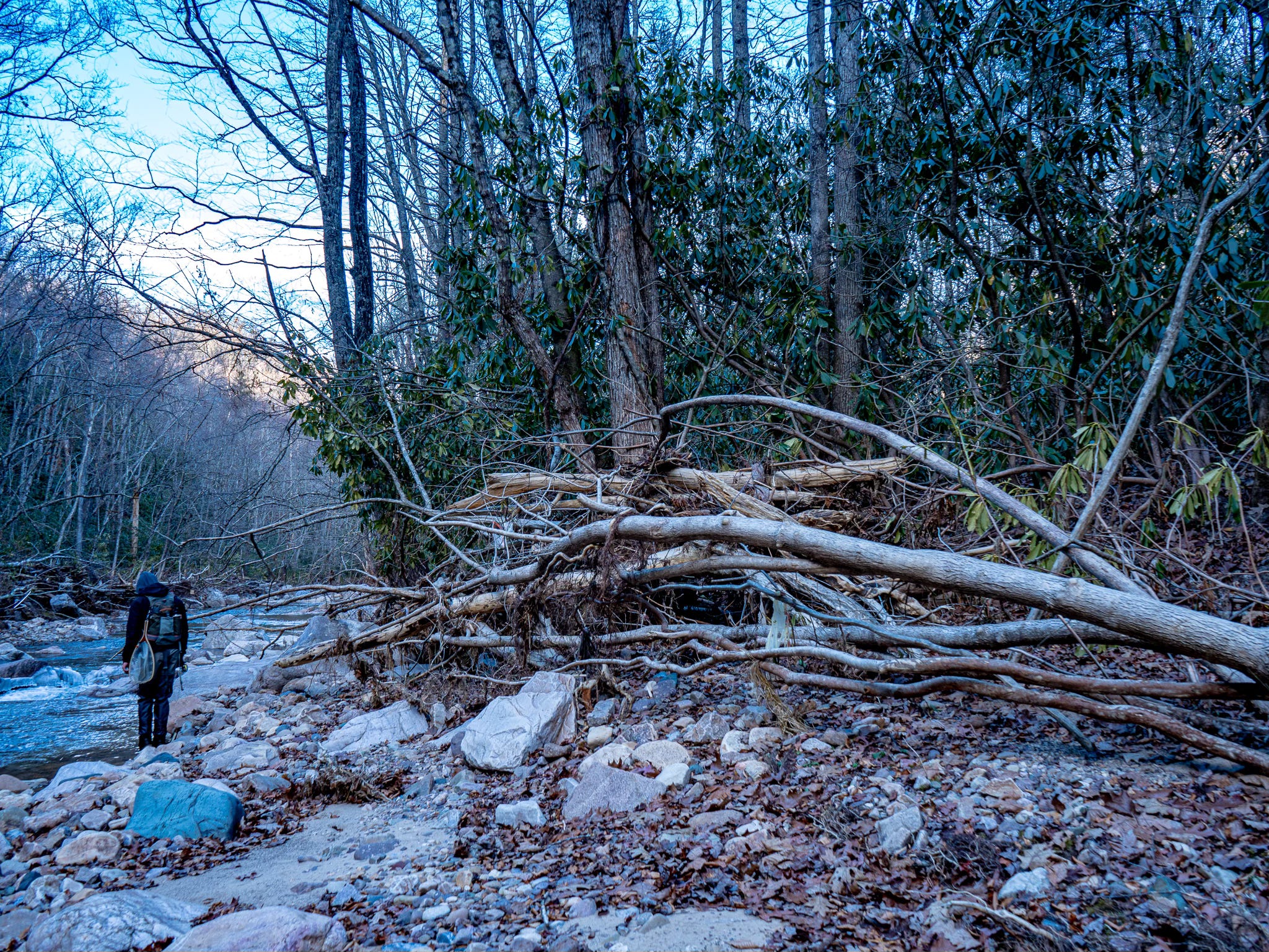
My friend standing next to a downed tree caused by the flood waters
The trip had been eye-opening. For the previous weeks, Hurricane Helene had blanketed the news, showing the horrors that towns in Eastern Tennessee and Southwest Virginia had endured. Seeing the devastation myself and hearing the stories from a man who had been personally affected by the tragedy was an experience that I’ll never forget.